












Fall Can Be One of the Most Visually Challenging Seasons for Golf

Why Autumn Conditions Can Put Your Golf Vision to the Test
Fall can be one of the best times of year to play golf. Cooler temperatures, changing leaves, and comfortable afternoons can make an autumn round hard to beat. But fall also introduces a combination of visual challenges that golfers may not experience as frequently during the middle of summer.
The sun sits lower in the sky, shadows stretch farther across fairways and greens, changing foliage creates busier backgrounds, and lighting conditions can shift considerably during a single round. Add morning moisture, haze, or an overcast sky, and your eyes can spend much of the day adapting to very different visual environments. For golfers, those changes matter. Golf depends heavily on being able to distinguish terrain, judge distance, track the ball, and recognize subtle details around the course.
The Fall Sun Sits Lower in the Sky
One of the biggest differences between summer and fall is the position of the sun. As the seasons change, the sun follows a lower path across the sky. That means golfers are more likely to encounter direct sunlight closer to their normal line of sight, particularly during morning and late-afternoon rounds.
A low sun can make it difficult to comfortably look down a fairway or follow a ball immediately after impact. Instead of sunlight primarily coming from overhead, it may be shining directly toward you. That can create intense glare precisely where you're trying to look.
Longer Shadows Can Change the Appearance of the Course
Lower sun angles also produce longer shadows. Trees, bunkers, mounds, flagsticks, and even relatively small changes in elevation can cast pronounced shadows across the playing surface. A green that appears relatively uniform under midday summer light may contain alternating areas of bright sunlight and deep shade during a fall afternoon. Those shadows can make terrain more difficult to interpret.
When you're reading a green or evaluating an approach shot, your eyes need to distinguish subtle contours and changes in elevation. Strong differences between bright and shaded areas can make those details harder to recognize consistently.
Your Eyes May Constantly Move Between Bright and Dark Areas
A fall golf course rarely presents one uniform lighting condition. You might stand on a shaded tee box and look toward a brightly illuminated fairway. Your next shot could require looking from an open fairway toward a green surrounded by trees. A few holes later, cloud cover may temporarily soften the entire scene.
Your visual system continually adapts as brightness changes. That transition can be particularly noticeable when moving between wooded and open portions of a course. Maintaining consistent eyewear throughout the round can help avoid introducing yet another major change in brightness every time conditions shift.
Fall Foliage Creates a More Complicated Background
Changing leaves are beautiful, but they can also create a visually busy environment. Instead of a relatively consistent wall of green foliage, golfers may be looking at combinations of green, yellow, orange, red, brown, and shadow. Now try following a golf ball against it.
Ball tracking requires maintaining visual contact with a relatively small, rapidly moving object as its background changes from sky to trees and eventually to the ground. The more visually complex that background becomes, the more valuable clarity and contrast can be. This is particularly noticeable on drives and long approach shots that travel across the tree line.
Morning Moisture Can Add Another Source of Glare
Cool fall mornings frequently bring dew and moisture to the course. Wet grass can reflect sunlight differently than dry turf, producing bright highlights across fairways and greens. When the sun is low, that reflected light can become especially noticeable.
This is also an example of why eliminating every reflection is not necessarily the goal of performance eyewear. Reflections can provide useful information about surface conditions. Being able to recognize that a green or fairway is wet can help a golfer better understand the environment in front of them. The goal should be managing distracting glare while preserving useful visual information.
Overcast Doesn't Mean Visually Easy
Not every fall round is bright and sunny. Cloudy conditions introduce their own challenges. Without strong direct sunlight, the course can appear flatter and differences between objects, contours, and terrain may become less pronounced. And conditions can change quickly. The sun may disappear behind clouds for several holes before suddenly returning. That variability means golfers benefit from lenses that aren't designed exclusively for one extreme lighting condition.
Why Dual-Zone Lenses Make Sense for Golf
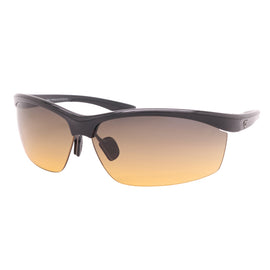
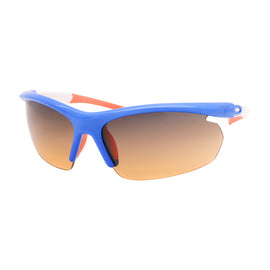
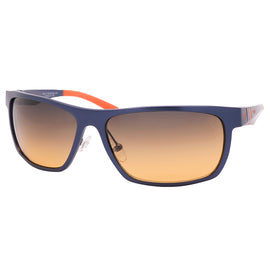
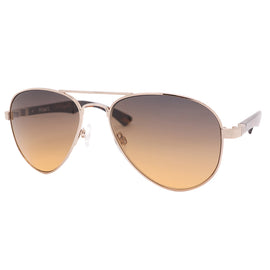
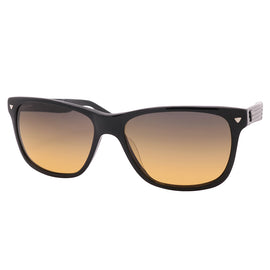
PeakVision's patented Dual-Zone lens technology was designed around a challenge golfers encounter throughout the year: the sky and the terrain rarely have the same brightness. The upper portion of the lens uses a neutral gray tint to help manage the brighter environment above the horizon. This is particularly useful when following drives and long shots against the sky.
The lower portion uses a contrast-enhancing amber tint designed to provide greater definition across greens, fairways, and surrounding terrain. During fall, when golfers may encounter bright skies, deep shadows, colorful backgrounds, and changing light within the same hole, having those two visual zones within one lens can be especially useful.
Consistency Matters From the First Tee to the Final Green
We've previously discussed why golfers shouldn't necessarily remove their sunglasses when they reach the putting green. Fall provides another reason to think about visual consistency. If your eyes have adapted to looking through performance lenses for the previous several holes, repeatedly removing those lenses forces your visual system to deal with another change in brightness and contrast.
A quality pair of golf sunglasses should provide enough optical clarity that you feel comfortable wearing them for the entire round, including while putting. That consistency becomes even more valuable when the surrounding lighting conditions are already changing on their own.
Don't Let a Beautiful Fall Day Fool Your Eyes
Fall golf offers some of the most enjoyable conditions of the year, but beautiful scenery doesn't always mean easy seeing. Lower sun angles, longer shadows, wet turf, changing foliage, variable cloud cover, and rapidly shifting brightness can all affect how the course appears.
The right performance eyewear can't read the green or hit the shot for you. What it can do is help provide clearer, more consistent visual information while your environment changes around you. PeakVision sunglasses are designed to manage glare, enhance contrast, preserve natural depth perception, provide zero-distortion clarity, and protect your eyes with UV400 protection.
So when the leaves begin to change and the shadows start stretching across the fairway, enjoy everything that makes fall golf special. Just make sure you're equipped to see it clearly. Explore the PeakVision Golf Collection to discover performance sunglasses engineered to help you see the course clearly through changing light, glare, shadows, and everything an autumn round can bring.