




Vision Tips for Wooded Courses

Finding Your Line When the Fairway Gets Tight
Wooded disc golf demands a different kind of vision. On an open fairway, there may be plenty of room to shape a shot and allow the disc to work through the air. Step into the woods, however, and the game changes. Fairways can narrow dramatically, trees create overlapping visual barriers, and a successful drive may depend on identifying a relatively small opening dozens or even hundreds of feet away. The PDGA notes that wooded fairways can feature pinch points as narrow as about 15 feet, illustrating just how visually demanding these holes can become.
Finding the right gap is not simply about looking for empty space. It requires your eyes and brain to separate foreground obstacles from background targets, judge distance, recognize subtle openings, and adapt to constantly changing light. Here are several ways better vision can help you navigate wooded courses with greater confidence.
Look Through the Gap Not at the Trees
Standing on a wooded tee can make it difficult not to focus on everything you want to avoid. Instead of concentrating on the trunks bordering your intended line, visually identify the open space between them. Pick a specific window and then choose a smaller target beyond that opening. This gives your eyes a positive reference point. You're no longer thinking about missing two trees. You're identifying the space through which you want the disc to travel.
The farther you can visually trace that opening into the fairway, the easier it becomes to imagine the complete flight path rather than simply trying to survive the first gap.
Contrast Helps Separate One Opening From Another
Wooded courses contain enormous amounts of visual information. Leaves, branches, tree trunks, shadows, dirt, grass, and patches of sunlight can overlap in your field of view. When contrast is poor, those elements can begin to blend together.
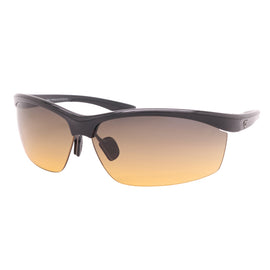
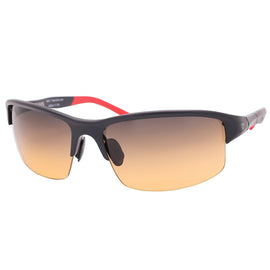
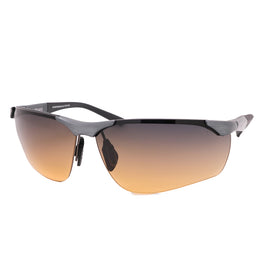
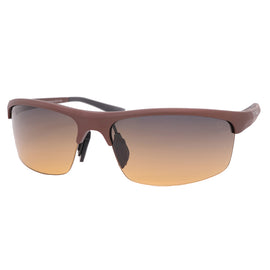
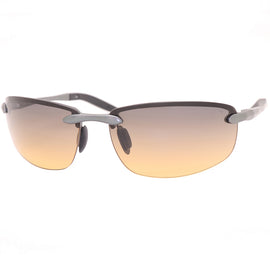
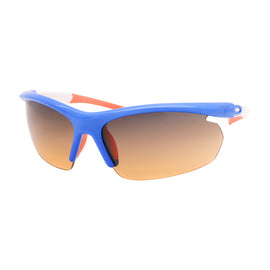
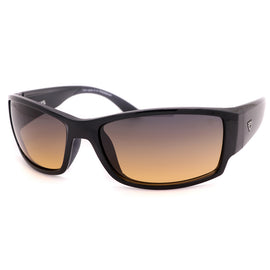
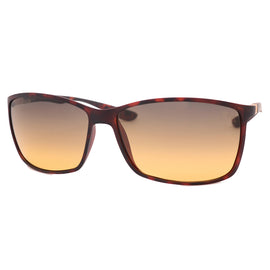
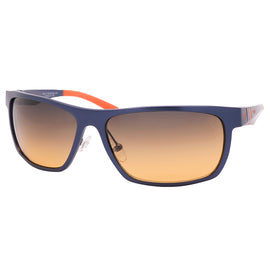
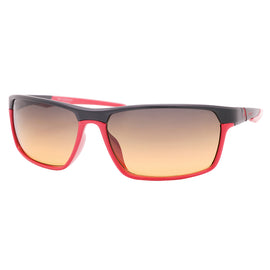
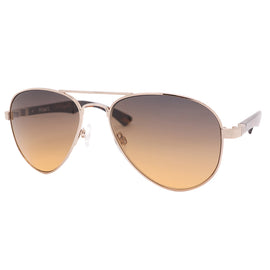
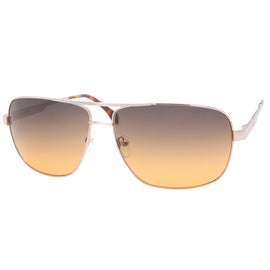
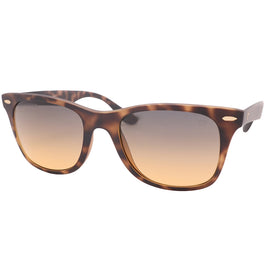
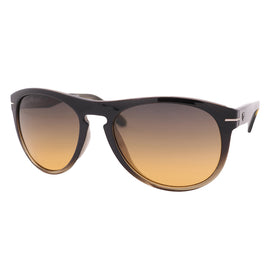
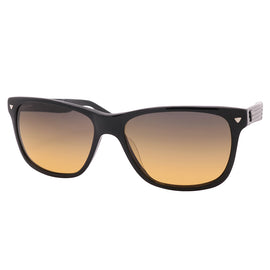
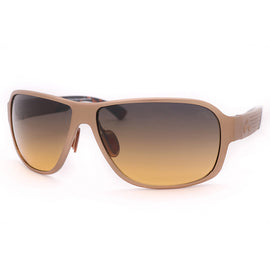
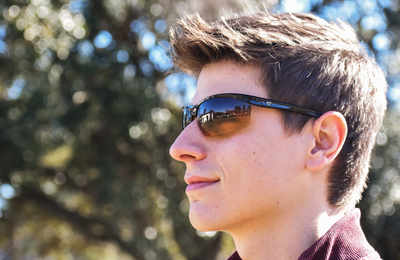
Better contrast helps define edges and distinguish objects from their backgrounds. This can make the boundaries of a throwing lane easier to recognize and help you identify branches or other obstacles extending into what initially appears to be an open gap. This is one reason PeakVision uses a contrast-enhancing amber zone in the lower portion of its Dual-Zone lenses. The technology is designed to improve terrain definition, basket visibility, and lines of play.
Don't Ignore What's Beyond the First Gap
The most obvious opening isn't necessarily the best line. Before committing to a shot, look beyond the first set of trees. A wide initial gap might narrow significantly farther down the fairway, while a slightly smaller opening near the tee could lead to a much cleaner landing zone.
Wooded-course strategy often requires thinking several visual steps ahead. The PDGA even recommends showing flight paths on tee signs for wooded and blind holes, underscoring the importance of understanding the intended route rather than focusing only on what is immediately in front of you. Scan the entire line whenever visibility allows. Look at the first gap, the next group of trees, the landing area, and where you would ideally like to throw from next.
Depth Perception Becomes Especially Important in the Woods
Two trees can appear close together from the tee even though one may be significantly farther down the fairway than the other. That difference matters. Accurate depth perception helps you understand how obstacles relate to one another in three-dimensional space. It can help you judge whether a gap is truly available for the flight you're considering and how much room the disc has to turn or fade after passing the first obstacle.
Optical distortion can interfere with that spatial information. PeakVision's non-polarized, zero-distortion lens design is intended to preserve visual accuracy and depth perception rather than introducing unnecessary visual changes into an already complicated environment.
Pay Attention to Changing Light
Wooded disc golf can produce some of the most challenging lighting conditions on the course. You might stand on a shaded tee while looking toward a brightly illuminated opening. On another hole, you may throw from sunlight into a dark tunnel of trees. Patches of direct sunlight can also break through the canopy and create bright areas surrounded by deep shadow. Your eyes continually have to adjust. That can make a gap appear less defined, hide smaller branches, or make it harder to follow a disc once it moves between bright and shaded areas.
PeakVision's Dual-Zone design was created specifically to manage different visual environments within the same field of view. The upper neutral-gray portion helps control brightness from the sky, while the lower amber portion enhances contrast and detail below the horizon.
Give Your Eyes a Moment Before Throwing
Don't rush immediately into your setup after walking from one lighting environment into another. If you've just stepped from an open, sunny fairway into dense shade, give yourself a moment to study the hole. Look down the fairway, identify the basket or landing zone when visible, and allow yourself to distinguish the different layers of trees. Then choose your gap. A few extra seconds of deliberate visual assessment may reveal a branch, secondary opening, or landing area you didn't notice at first glance.
Track the Disc Beyond the Opening
Hitting the gap is only the beginning. Once the disc passes through your intended window, you still need to track its turn, fade, kicks, and eventual landing position. Losing sight of a disc in dense woods can make the next shot considerably more difficult.
Glare and changing light can interfere with tracking moving objects, particularly when they pass between bright and shaded backgrounds. Maintaining clear vision throughout the entire flight can therefore be just as important as seeing the initial gap.
Why PeakVision Works Well in the Woods
Wooded courses highlight many of the reasons PeakVision developed its lens technology for performance sports.
PeakVision Disc-Golf sunglasses combine:
- Contrast-enhancing amber lenses to help define terrain, baskets, trees, and lines of play.
- Neutral-gray upper lens zones to manage bright sky and overhead light.
- Zero-distortion optics to help preserve visual accuracy and depth perception.
- Non-polarized lenses designed to maintain natural visual information.
- RA filters to help manage distracting glare.
- UV400 protection for UVA and UVB protection during long hours outdoors.
The objective isn't to make a wooded course look artificially bright or dramatically different. It's to provide a clearer, more balanced view so you can better interpret what is already there.
Find the Window and Trust Your Line
Wooded disc golf rewards precision, patience, and good decision-making. Sometimes the difference between a clean drive and an early tree kick is only a few feet. Being able to clearly distinguish gaps, judge the distance between obstacles, recognize changes in light, and follow your disc through the woods gives you better visual information before and after every throw. You still have to hit the line. But first, you have to see it.
Explore the PeakVision Disc-Golf Collection to discover performance sunglasses designed to help you see gaps, terrain, flight paths, and landing zones more clearly from the first tee to the final basket.