
















Why Our 52 Abbe Rating Makes a Difference

Stand behind your ball on a sunny afternoon and look at the edge of the green against the fringe. With some lenses that edge has a faint fringe of color, a slight blur of blue or orange where two colors meet. Most people never notice it. Their eyes just work a little harder all day.
That blur is called chromatic aberration. Every lens material splits light into its colors a little, the way a prism does, and the Abbe value is how it's measured. The higher the number, the less the colors separate and the cleaner edges look. A value around 50 or above counts as high. Ours is 52.
What it changes on the course
Almost everything you look at on a golf course is an edge: the ball against the sky, the flag against the trees, the lip of the cup, the line where the fairway turns into rough. A lens that keeps those edges clean makes them easier to judge. It's a big part of why people tell us the first thing they notice when they put on a pair is how sharp everything looks.
It matters over a long day, too. A blurry edge makes your eyes work harder to sort it out, and over four or five hours outside that adds up. Less color spread means less work, and that's a lot of what makes a pair comfortable from the first tee to the drive home.
Sharp edges and more contrast
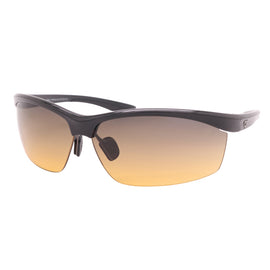
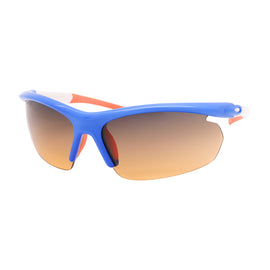
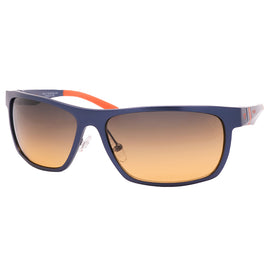
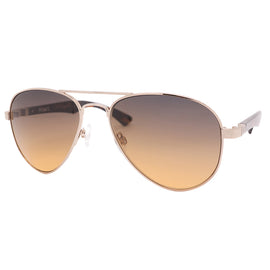
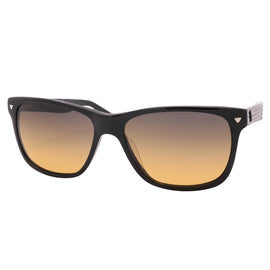
The Abbe value keeps the picture sharp. Our Dual-Zone lens adds contrast on top of that. The top is neutral gray for a bright sky, and the bottom is high-contrast amber, which brings out detail in the grass when you look down at the ball or read a putt.
You'll find that lens in the GX5, our best seller, the GX6, which has a taller lens, and the SL9 if you want more coverage. You can also see all our golf sunglasses or read how the lens is made on our Technology page.
Every pair ships free in the US within a day, and you have 30 days to send them back if they don't work for you.