












Why You Should Wear Sunglasses — Even When It’s Cloudy

Overcast days are some of the nicest days to play. It's cooler, nobody's squinting, and plenty of golfers leave their sunglasses in the bag. We'd keep them on, for two reasons.
The first is UV. Up to 80% of UV rays get through cloud cover. You don't feel it the way you feel bright sun, so it's easy to spend five hours outside with no protection at all. Over the years that exposure adds to the risk of cataracts, macular degeneration and sunburned corneas. Your skin tells you when you've had too much sun. Your eyes usually don't.
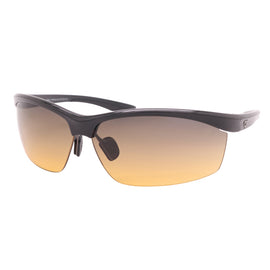
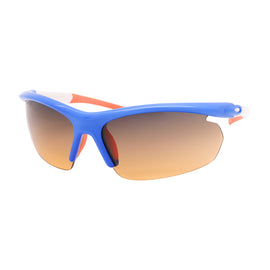
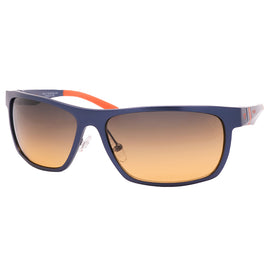
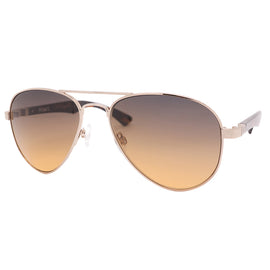
The second is how the course looks. Clouds flatten the light. Shadows go soft, the contours on the green get harder to see, and the ball can disappear against a gray-white sky. That's the light where a high-contrast amber lens helps most. It brings back some of the detail the clouds wash out, so slopes and breaks are easier to pick up.
If you bring your kids to the course, it matters even more for them. According to the Lighthouse Guild, children's eyes let up to 70% more UV reach the retina than adults' do.
One pair for any sky
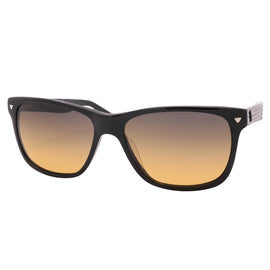
Every pair we make blocks 100% of UVA and UVB. Our Dual-Zone lens is neutral gray on top for a bright sky and high-contrast amber on the bottom for detail on the ground, so the same pair works on a sunny afternoon and a gray morning. Start with the GX5, our best seller, the GX6, or the SL9 for more coverage. You can also see all our golf sunglasses or read about the lens on our Technology page.
Every pair ships free in the US within a day, and you have 30 days to send them back if they don't work for you.